Monday, April 8, 2013

Developing Critical News Consumers


“Students can explore the information gathered in context, which means that they examine the information in relation to the medium that produced it and determine the degree to which what they read is affected by interests, perspectives, agendas and worldviews that from knowledge and knowing in particular ways.  Using a lens that combines teaching with, through, and about the newspaper, we offer a conceptual framework for such an engagement by highlighting important issues for consideration and presenting questions that can make the process more meaningful than currently taking place in social studies classrooms.” (92)

Segall, A and Schmidtt, S. (2006). Reading the newspaper as a social text.  The Social Studies, 97, 3, 91-99.

In their article “Reading the Newspaper as a Social Text”, Avner Segall and Sandra Schmidtt argue that educators need to alter the way they use newspapers in the classroom.  They acknowledge that yes, we can promote literacy through newspapers but we should also be teaching literacy of newspapers.  They say we should be teaching our students to read newspapers critically, not merely using them as an unquestioned source of facts.  The authors also claim that many educators do little to dissuade students from viewing newspapers as neutral sources of information.  They argue that we should show them instead that newspapers are “sources of positions” that deliberately include certain details while leaving out others.  The authors urge teachers to explain to students that because the news is written by people and does not write itself, it is influenced by a myriad of choices made by those who gather, write, edit, and prioritize the news.  We should explicitly show students how newspapers are made and ask them to explore, observe, and question those choices made by journalists, editors, and newspaper owners. Many social studies teachers who employ newspapers in the classroom use them to teach curriculum, few teach them as part of the curriculum.  While critical of current trends in newspaper education in social studies classrooms, Segall and Schmidtt offer a straightforward approach teachers can follow to introduce their students to real newspaper literacy. 

I found their suggested method to be thought-provoking and engaging for students.  They recommend that teachers lead their classes through a lesson that analyzes and compares different sections of newspapers and among different papers.  The authors advise educators to start with the front page, asking students to make observations about what stories appear and then push them to make conclusions about the perspectives the newspaper is promoting.  They then propose that students examine stories on the inner pages.  How do they differ from stories on the front page?  Do you think any of these stories should have been placed on the front page?  I love the idea of asking students questions like these.  I believe that the act of thinking about the placement of stories within a newspaper is a very accessible way to start thinking about all of the decisions, opinions, and perspectives that affect newspaper creation.   I also agree with their suggestion that teachers ask their students to compare different newspapers.  They can look at similarities in differences between papers that cover national news or between papers that cover different types of news such as international, national, local, and tabloid stories.  Most of all, I could see myself guiding students through an exploration of newspapers from different parts of the world.  In addition to major American newspapers like The Washington Post, The New York Times, and The Christian Science Monitor, I would add English-language versions of Aljazeera, The Times of India, and The Nation from Kenya (http://www.aljazeera.com/, http://timesofindia.indiatimes.com/ , http://www.nation.co.ke/ ).  I agree that it is important that students see that people in other parts of the world make different choices when deciding which stories to write and publish in their newspapers.  I think this would provide a great opportunity to talk about perspective.   I plan to tuck away this article, eager to put its recommendations into play as soon as I can!

Monday, March 25, 2013

Teacher Initiative in Civics Education


“Again, teachers need to recognize the static nature of standards and frame their instruction accordingly.  Recent studies have found that social studies classrooms rarely utilize discussion, and scholars often point to standards-based education as a contributing factor… The SOLs contain few standards designed to stimulate discussion; therefore, teachers must act on their own to foster the ideals of deliberation in their classrooms.  A similar argument can be made for participatory and social justice aspects of citizenship.  The ubiquitous nature of standards prohibits specific recommendations for active or communitarian aspects of citizenship.  It is the responsibility of educators to encourage students to participate in democracy in order to develop habits associated with active citizenship, rather than to simply reap its benefits as passive spectators.” (p. 357)

Journell, W. (2010). Standardizing citizenship: the potential influence of state curriculum standards on the civic development of adolescents.  PS: Political Science & Politics, 43, 351-358.

     This passage appears in the conclusion of Wayne Journell’s article on the current state citizenship education.  Journell bases his research on the Virginia Standards of Learning for civics and government courses; he examines the types of citizenship standards advocate, the differences between civics and government standards, and how well those standards prepare students to participate in our society as citizens.  Upon inspection, Journell finds that if teachers design instruction based on standards alone, their students will not necessarily practice group discussion or deliberation of complex ideas.  He also suggests that Virginia’s SOLs do not ask students to simulate democratic participation, think about social justice, or focus on their role in the community.  He acknowledges that this is likely due to the seemingly “political” nature of such topics. However, Journell argues that the subject is inherently political and if we remove all items that could be construed as advocating a particular political ideology, we will distill civics education to an unhelpful list of facts.  The author urges classroom teachers to create lessons that push students beyond memorizing the function of politics and government to practicing the habits they will need to take full advantage of their status as members of American society.  He says that because the standards are not sufficient for fostering effective citizenship on their own, teachers should supplement them with opportunities for students to act in their classrooms, schools, and communities.  The Civic Mission of Schools report agrees with Journell.  The report finds a lack of civic knowledge, low level of civic engagement, and civic achievement gap among the American populace.  These results offer evidence for the author’s argument; teachers need to do something differently to ensure students receive effective civics education.  

    I wholeheartedly agree with Mr. Journell.  Civics education must change in order to prevent the deficiencies we continue to see American adults.  The Civic Mission of Schools report found that a shocking number of adults do not retain an accurate understanding of how our institutions function.  For example, the report shows that “only one-third of Americans could name all three branches of government; one-third couldn’t name any”, “almost a third mistakenly believed that a U.S. Supreme Court ruling could be appealed”, and “Only one in five Americans between the ages of 18 and 34 read a newspaper, and only one in ten regularly click on news web pages” (p. 4, 14).  Statistics such as these indicate that we need to change our approach to educating our citizens.  Instead of merely teaching a collection of facts about the Electoral College, the three branches of government, and the Constitution, we need to teach our students in a way that is relevant to their lives.  I believe one way we can begin showing students the importance of civic knowledge would be to move beyond discussing the “whats” and diving into the “whys” of our governmental structure.  If we ask our students to think about how our political system and social structure came about they will start to see how they are relevant to their lives.  We need to explain the social contract AND help them develop their political agency.  If social studies teachers are committed to educating students to be effective citizens, we must use the standards as a guide, but we should build upon them.  We need to find creative ways that teach students the facts they need to know for their standardized assessments and prepare them to apply what they have learned in their lives.  Relevance is key.  


Monday, February 25, 2013

The Myth of the Neutral Exhibition


“However, providing service to others is not an unproblematic undertaking.  For the exhibition of historical information to contribute to humanistic education, it must involve information that other people want and need.  This is a tricky proposition.  Those who have information to display typically control the form and content of its presentation, and they may have the power and resources to impose their conception of ‘needed information’ on others.  This dominance is a particular problem within the exhibition stance because it is less obvious: Analysis, identification, and moral response are easily recognized as social constructions, but information that is simply displayed can take on the appearance of a natural, inevitable, or objective representation of the world.  It appears to ‘mirror’ historical reality rather than interpret it.” (p. 121)

Barton, K. and Levstik, L. (2004). Teaching History for the Common Good. Mahwah, NJ: Lawrence Erlbaum Associates, Inc.

     In chapter 6 of their work Teaching History for the Common Good Keith Barton and Linda Levstik address the tendency to “exhibit” history without actually doing the historical work of making connections and drawing conclusions.  They aim to draw a distinction between history and trivia.  The chapter acknowledges the personal fulfillment that one can experience when “displaying” historical facts and does not completely condemn the urge to partake in such displays.  However, Barton and Levstik do warn of the dangers of confusing that sort of treatment of history with authentic academic work, especially in terms of accountability tests.  This passage examines the role of historical exhibition as service to others.  The authors note that while the perspective of the exhibitioner might be fairly easy to discern when speaking with another person, it is much less obvious when looking at an historical reenactment or museum collection.  They argue that when information is presented in a way that appears neutral, it is very likely that viewers will accept the view forwarded by the exhibitioner without much thought.  While the creators of the exhibition might not be aware of any agenda underlying their presentation, they do make deliberate decisions regarding which artifacts, events, and information to include and which to exclude.  These choices impact the audience’s perception of whatever the exhibition displays.  Barton and Levstik insist that we must be aware of these decisions and to consider them as we experience historical exhibition.    


     This passage reminded me of a museum I visited half a dozen times over the two years I lived in South India.  I remembered an exhibition that always struck me as odd due precisely to its seeming neutrality on a subject I would have thought would have been presented with commentary.  The museum at Fort St. George in Chennai includes a collection of British military uniforms and other artifacts dating from imperial control under the Raj (http://asi.nic.in/asi_museums_chennai.asp).  The curators of the exhibit chose not to include any commentary on the artifacts but merely provided information on the provenance of the items.  Visitors walk through a dimly lit, century-old officer’s residence, peering into cases of kilts, wool jackets, bearskin hats, dainty china with floral patterns, and etched silver tea sets.  Each time I saw those heavy uniforms and totally impractical serving ware, all I could think was “how can the exhibitioners, who work for the current Indian military, not mention how ridiculous it was for their former colonial rulers to bring wool and silver to a humid coastal town that never sees temperatures below the mid-seventies?”.  I am still not quite sure what their silence on the preposterous effort by soldiers to try to recreate Britain in a tropical climate, but the utter lack of narrative made me very aware of the choice.  Barton and Levstik’s chapter on displaying history made me think of the Fort St. George museum and reminded me that curators’ choices are not always so obvious.  It encourages me to better prepare students before going to a museum.  I have already thought about talking to students about what they will see and preparing them for a visit to a place like the Holocaust Museum where they might encounter difficult images or information.  Likewise, I have taught lessons in which I ask students to consider perspectives presented by primary and secondary source documents we examine in class.  This passage showed me that I should urge my students to ask the same questions about exhibitions of history which appear “neutral”.  I should ask them to think about how and why certain information is presented, analyzing a museum exhibition like they would any secondary source.  Now that I have thought about Barton and Levstik’s chapter, their suggestion seems obvious.  I just needed them to highlight the obvious for me.

Tuesday, February 12, 2013

Why timelines?


“When they engage in this process, students move beyond the simple reflection of temporal order generated by the analysis of a time line to a more critical determination of how the events along the line were determined to have a relationship with one another. By challenging students to create chronology, they gain insight into how historians have determined what happened in the past and to practice the types of thinking skills relevant to the twenty-first century.” (p. 77)

Lesh, B. A. (2011). “Why won’t you just tell us the answer?”: Teaching historical 
                   thinking in grades 7-12. Portland, ME: Stenhouse Publishers.


Chapter 4 of Bruce Lesh’s book focuses on a lesson he used in his classroom to teach students about both chronology and causality.  Lesh gave his students a collection of source documents relating to the Rail Strike of 1877 and asked them to develop a chronology.  The class uses their documents to create a narrative describing what happened.  However, Lesh’s lesson does not en d there.  He next asks his students to explain the relationship between the events along the chronology.  

Why did he create such a lesson?  Why timelines?  This exercise is about more than the Rail Strike of 1877 and it is more about making sure students can arrange events in chronological order.  The key to this lesson is the emphasis on determining causality between the events.  A timeline is a useful tool, employed by historians and history teachers alike, to illustrate patterns and connections between events.  When students look at a series of documents, images, or descriptions of events, they need to be able to make inferences about the relationship between the information in order to make sense of it.  Lesh also points out that this lesson allows students to practice skills that are identified by the National Standards for History including “identify[ing] in historical narratives the temporal structure of a historical narrative or story”, “interpret[ing] data presented in time lines”, and “reconstruct[ing] patterns of historical succession and duration” (p. 78).  A lesson such as this one allows a teacher to combine content instruction with development of historical thinking skills.

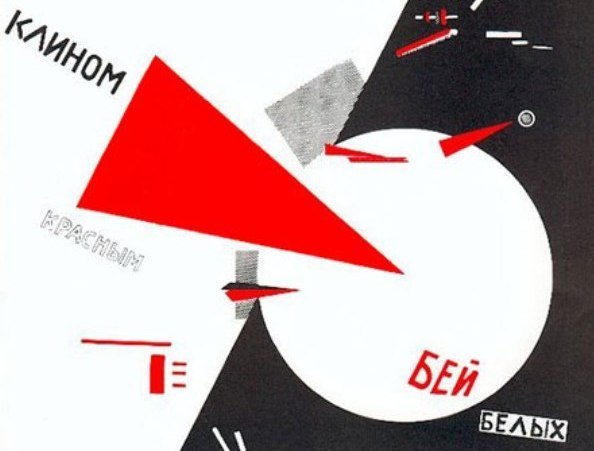
I was happy to read this passage on the day I did, because I was in the process of preparing a lesson in which I had already decided would include a timeline activity.  Lesh’s lesson gave me confidence that my instinct to ask students to use a timeline to make inferences about a time period was supported by work done by a much more experienced teacher.  I am in the middle of co-teaching a unit on the rise of Stalin to power in the Soviet Union and wanted to introduce a new type of document that historians use to learn about a period: art!  I displayed a collection of Soviet Avant-Garde and Socialist Realist art along a timeline on the board stretching from the Bolshevik revolution to 1940.  I did not include any titles of the works because I wanted students to examine the pieces based on their images, without any hints titles might give.  I designed this activity to give students a chance to make connections among the art on the timeline without any commentary.  I hoped they would be able to see the abrupt change in artistic styles and make inferences about why such a drastic change might have happened.  I am pleased to report that my students exceeded my expectations!  They used their knowledge of the time period and the Soviet regime to correctly hypothesize that government censors eventually deemed abstract art to be a little too “bourgeois” and not accessible to a wide enough audience to serve their purposes.  The timeline gave them a much clearer idea of the changes over time than they would have had if they had just read about the works, or looked at them in a book.   The ability to see the pieces plotted over time gave my students the opportunity to make connections between what they saw and the methods they knew Soviet officials used in other aspects of society.  I will definitely be using timelines in this manner in the future.  Thanks Mr. Lesh!

"Beat the Whites with the Red Wedge". 1919.  by  El Lissitzky http://www.michaelarnoldart.com/Beat%20the%20Whites%20with%20the%20Red%20Wedge.jpg


"Women of the Kolkhoz". c. 1930-1940. Artist unknown


Monday, January 28, 2013

A new generation of historians? Maybe?


“The goal is not to train a new generation of historians.  Instead, the historical investigation model is designed to generate student interest in studying the past, engender competence with a set of thinking skills that will benefit them beyond the school walls, and promote an understanding of the major events, people, and ideas that populate the American past.” (p. 73)

Lesh, B. A. (2011). “Why won’t you just tell us the answer?”: Teaching historical 
            thinking in grades 7-12. Portland, ME: Stenhouse Publishers.

This passage tidily summarizes Bruce Lesh’s philosophy that underlies his method of emphasizing text, subtext, and context, to teach historical thinking.  He does not intend to lead his students through an apprenticeship at the end of which they emerge professional historians.  Instead, he argues for a more practical approach in which students learn thinking skills that they can then apply in other areas of their lives. How does he define historical thinking?  Lesh points to a quote from Linda Levstik and Keith Barton that argues “historical thinking is fundamentally about judgment – about building and evaluating warranted or grounded interpretations.  History, then, is not just opinion: It is interpretation grounded in evidence” (p. 21).   Lesh advances this idea throughout the first three chapters of his book as he describes how he designs his classes around source-based inquiry.  He introduces them to sources with conflicting information, showing them that there is not one correct interpretation of a particular event.  However, this passage on page 73 also shows that while he places great importance on introducing historical modes of thinking, he does not limit his instructional aims to skills.   He also seeks to give his students a better “understanding” of the past.  The word understanding suggests that he does not wish to provide a bank of trivial information students can use to impress someone at some point in the future, but instead to give them a context in which they can comprehend their world. 

In this passage Lesh hits upon some of my most closely held beliefs about the purpose of teaching social studies.  My goal is to teach students how to think critically, question the validity of information they come across, and how to use that information to participate in their communities in a more thoughtful way.  I recognize that not every student will become an historian and many will not formally study history after high school.  I know that I will come across students who have encountered social studies instruction that distilled the content to a list of factoids to be memorized and that I will need to show them the relevance of history to their lives.  I believe that we can learn from the past because there are patterns that we can discern that reveal something about human nature.  I want to introduce my students to this possibility with the hope that they could finally see some utility in studying what I heard one student refer to as a story about the “successes and failures of old, dead guys”.

On the other hand, I just might have a few future historians in my classes.  For those students who wish to pursue history or any social science, I want to give them the tools they will need to succeed in academic study beyond my classes.  While I believe I received a fantastic secondary education, I was never explicitly taught how to source a document until a professor took the time to do a think aloud with my class during my junior year in college.  I had developed some of the skills intuitively but others felt like an empowering revelation.  I do not want my students who want to pursue history wait until a professor (if any) decides that students need a basic understanding of how to examine the context and subtext of sources.  I want to make my classes useful for both types of students: the future historian and the future citizen.

Friday, January 25, 2013

Let's go!

Welcome to Expeditions in Social Studies!

I am a graduate student working toward an M.Ed. in Secondary Education with a specialization in Social Studies in Washington, D.C.  I am a lover of history, geography, anthropology, and a dabbler in economics.  I have worked in several different types of learning environments including a swimming pool, an art museum, a higher education association, and a community-focused office with the US government.  I realized that what I loved about all of these different jobs was the educational component and decided that I should do what I love full-time!

I am currently doing a teaching internship with an incredible group of high school students and will be working with middle schoolers in a few short months.  My two internships will be very different placements but I am excited for the challenge!

I am a traveler by nature and by lifestyle: I have lived in France, India, and am getting ready to move to Zambia this summer.  My own explorations influence my thinking about social studies and will certainly inspire expeditions I hope to undertake with my students. 

Enough introduction - let's go!