“When they engage in this process, students move beyond the
simple reflection of temporal order generated by the analysis of a time line to
a more critical determination of how the events along the line were determined
to have a relationship with one another. By challenging students to create
chronology, they gain insight into how historians have determined what happened
in the past and to practice the types of thinking skills relevant to the
twenty-first century.” (p. 77)
Lesh, B. A. (2011). “Why
won’t you just tell us the answer?”: Teaching historical
thinking in grades
7-12. Portland, ME:
Stenhouse Publishers.
Chapter 4 of Bruce Lesh’s book focuses on a lesson he used
in his classroom to teach students about both chronology and causality. Lesh gave his students a collection of source
documents relating to the Rail Strike of 1877 and asked them to develop a
chronology. The class uses their
documents to create a narrative describing what happened. However, Lesh’s lesson does not en d
there. He next asks his students to
explain the relationship between the events along the chronology.
I was happy to read this passage on the day I did, because I
was in the process of preparing a lesson in which I had already decided would
include a timeline activity. Lesh’s
lesson gave me confidence that my instinct to ask students to use a timeline to
make inferences about a time period was supported by work done by a much more
experienced teacher. I am in the middle
of co-teaching a unit on the rise of Stalin to power in the Soviet Union and wanted
to introduce a new type of document that historians use to learn about a
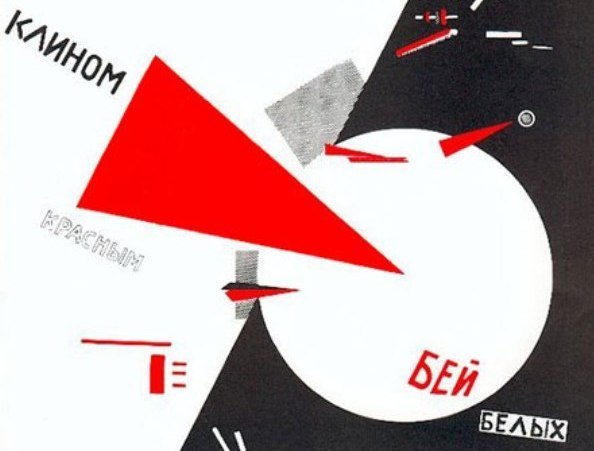
period: art! I displayed a collection of
Soviet Avant-Garde and Socialist Realist art along a timeline on the board
stretching from the Bolshevik revolution to 1940. I did not include any titles of the works
because I wanted students to examine the pieces based on their images, without
any hints titles might give. I designed
this activity to give students a chance to make connections among the art on
the timeline without any commentary. I
hoped they would be able to see the abrupt change in artistic styles and make
inferences about why such a drastic change might have happened. I am pleased to report that my students
exceeded my expectations! They used their
knowledge of the time period and the Soviet regime to correctly hypothesize
that government censors eventually deemed abstract art to be a little too
“bourgeois” and not accessible to a wide enough audience to serve their
purposes. The timeline gave them a much
clearer idea of the changes over time than they would have had if they had just
read about the works, or looked at them in a book. The ability to see the pieces plotted over
time gave my students the opportunity to make connections between what they saw
and the methods they knew Soviet officials used in other aspects of
society. I will definitely be using
timelines in this manner in the future.
Thanks Mr. Lesh!
 "Beat
the Whites with the Red Wedge". 1919. by El Lissitzky http://www.michaelarnoldart.com/Beat%20the%20Whites%20with%20the%20Red%20Wedge.jpg
"Beat
the Whites with the Red Wedge". 1919. by El Lissitzky http://www.michaelarnoldart.com/Beat%20the%20Whites%20with%20the%20Red%20Wedge.jpg


"Women of the Kolkhoz". c. 1930-1940. Artist unknown

What a cool idea Abbie, and what a great way of demonstrating for your students change over time. This also reminds me of Lesh’s Pledge of Allegiance activity, allowing students to see for themselves how and why changes occurred. I personally am not very comfortable with art and am often nervous about using it correctly in the classroom, and think this is a great way of using art in a historical way. I love seeing how you used Lesh’s ideas in a different time period and how it worked for your students.
ReplyDeleteDo you think that this activity could have been done without giving the students any order for the art to begin with? As in just giving the students the paintings and seeing if they could order them themselves. I would be curious if students would have gotten caught up on the abstract art being “newer” than the realistic pieces. Even as an introduction it might be an interesting way to demonstrate the challenges in looking at change over time and assumptions about progress.
Great question Kyle! During the next section of the lesson I gave students a collection of works including paintings, drawings, a poem, and film clip, with the dates removed. I asked them to take on the perspective of an official on the censor board. Their objective was to rank the pieces from most useful to Stalin to least useful to the leader. I wanted to see if they had internalized the part of the lesson in which they learned that Soviet art became less abstract as time passed. While I didn't ask them to put the pieces in chronological order, many of them did just that when they were deciding which best supported Stalin's position at the head of the USSR.
ReplyDelete